Purchasing a diamond is a significant decision. GIA certificates allow you to make it with complete confidence.
The Gemological Institute of America (GIA) has been entrusted with grading some of the world’s most famous diamonds; the very same unparalleled expertise is applied to evaluating your precious gemstones. The judgment of the independent, non-profit GIA is considered the ultimate authority in determining a diamond's authenticity and quality. GIA created the 4Cs (Carat Weight, Clarity, Color, and Cut) and the International Diamond Grading System™ — the global benchmark standard for diamond quality evaluation. GIA tests every gemstone to screen for laboratory-grown diamonds, simulants, and known treatments. Expert gemologists examine each diamond under specialized, controlled lighting conditions to rigorously evaluate its characteristics according to the 4Cs. Every GIA grading report provides detailed findings alongside additional descriptions and advanced security features.
Color :
The GIA Color Scale ranges from D (colorless) to Z (light yellow or brown). While many believe that gem-quality diamonds must be colorless, truly colorless diamonds are extraordinarily rare. Most diamonds used in fine jewelry are nearly colorless with subtle hints of yellow or brown. Color grading is performed by comparing each diamond against a set of master stones. Each letter grade represents a range on the color scale and measures how noticeable the color is. Notably, under ultraviolet light, some diamonds emit a visible glow; however, fluorescence is not a mandatory requirement for determining a stone’s color or clarity. Nevertheless, GIA reports note both the color and intensity of fluorescence as distinguishing characteristics.
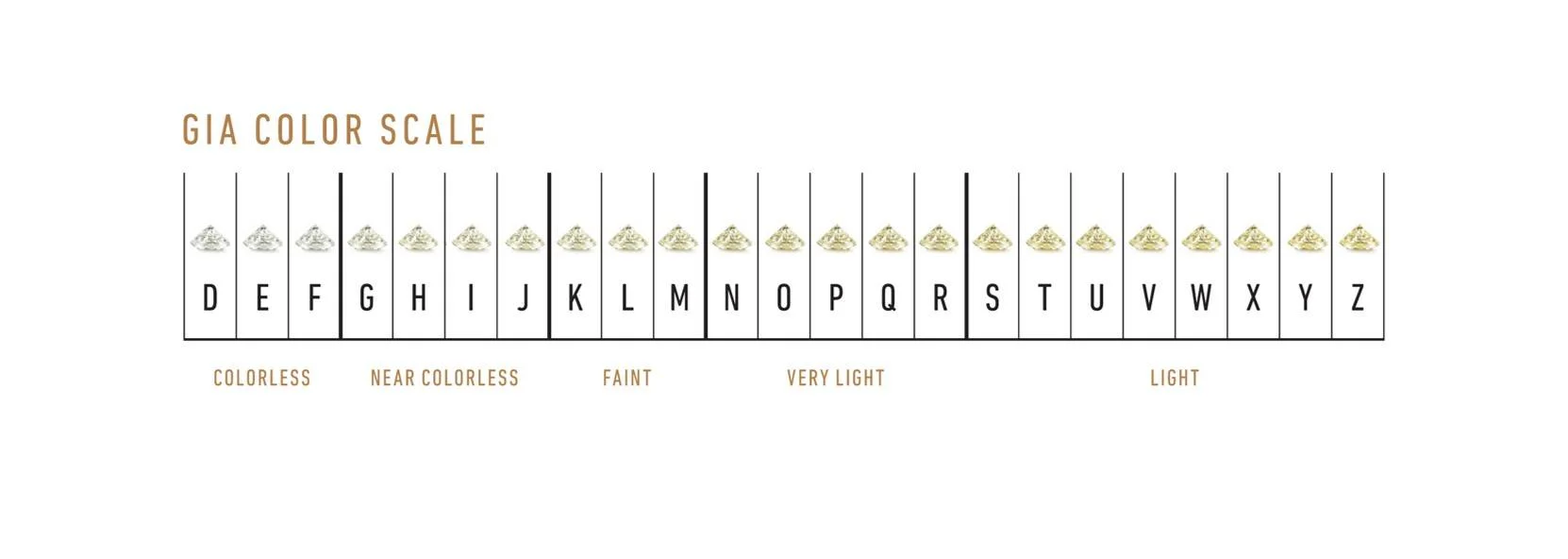
From left to right: Colorless (D–F), Near Colorless (G–J), Faint (K–M), Very Light (N–R), Light (S–Z)
Clarity :
The GIA Clarity Scale includes eleven grades ranging from Flawless to Included (I3). Because diamonds form under conditions of extreme heat and pressure, stones without any internal or external distinguishing characteristics are exceedingly rare. These features are a natural byproduct of their formation process and help gemologists distinguish natural diamonds from lab-grown or simulated alternatives, as well as identify unique individual stones.
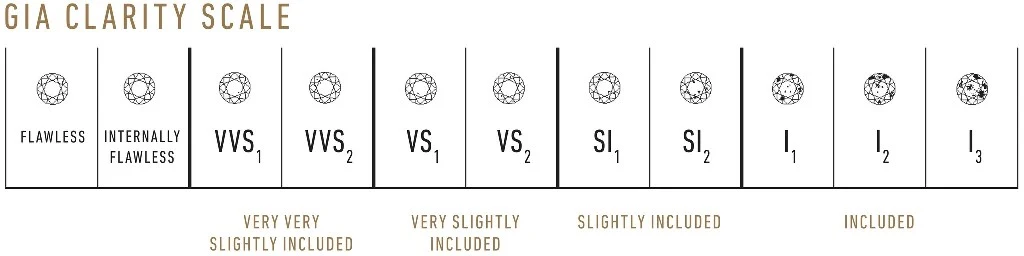
From left to right: Flawless (Flawless), Internally Flawless (IF), Very Very Slightly Included (VVS1, VVS2), Very Slightly Included (VS1, VS2), Slightly Included (SI1, SI2), Included (I1–I3)
Cut :
The GIA Cut Scale ranges from Excellent to Poor. At the heart of a diamond's exquisite beauty lies its complex interaction with light. The magnificent display you observe consists of three distinct components: Brightness: The total white light reflected from both the exterior and interior surfaces of the diamond. Fire: The dispersion of light into vivid spectral colors. Scintillation: The pattern of light and dark areas combined with the flashes of light produced when the diamond, light source, or observer moves. A diamond's proportions dictate how effectively it reflects light, directly influencing its beauty and overall appeal. Precise proportions, symmetry, and polish ensure optimal interaction with light, enhancing brightness, fire, and scintillation. GIA assigns cut grades to standard round brilliant diamonds within the D-to-Z color range.
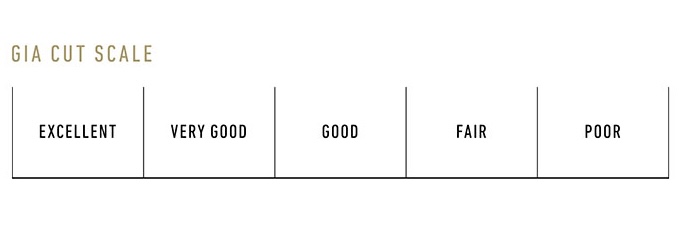
From left to right: Excellent, Very Good, Good, Fair, Poor
Carat Weight :
By weight, one carat equals 200 milligrams. For diamonds under one carat, each carat is divided into 100 points, much like cents in a dollar (e.g., 0.75 ct = 75 points; 0.50 ct = 50 points).
While the 4Cs provide an objective framework for comparing and evaluating diamonds, numbers alone cannot capture their elusive and captivating beauty. To truly experience a diamond, we invite you to meet with our diamond expert and choose your exceptional stone.